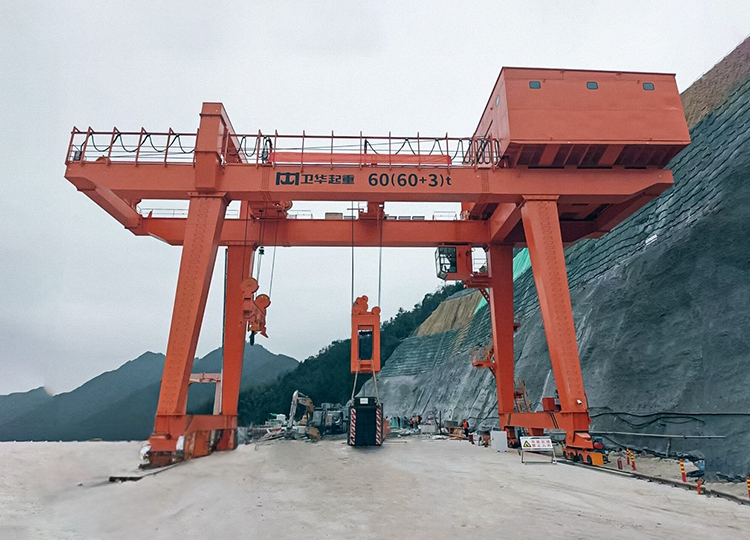
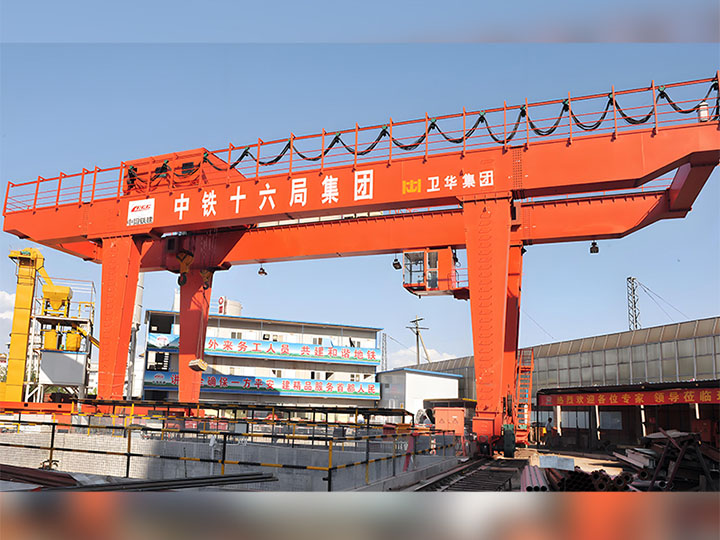
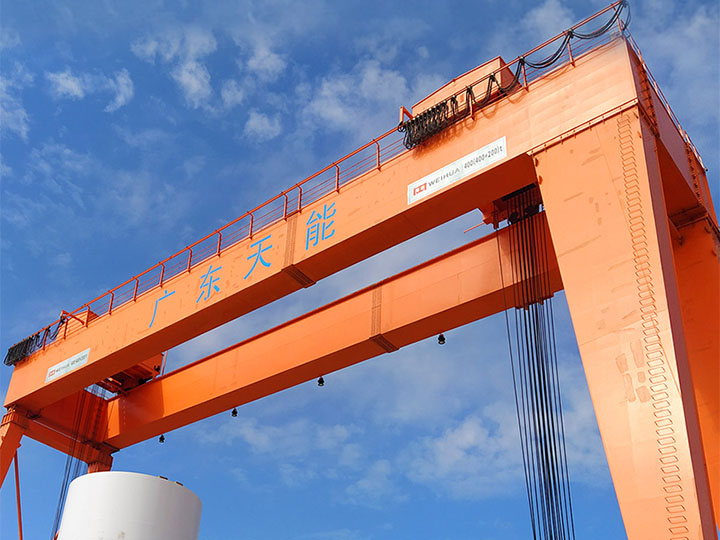
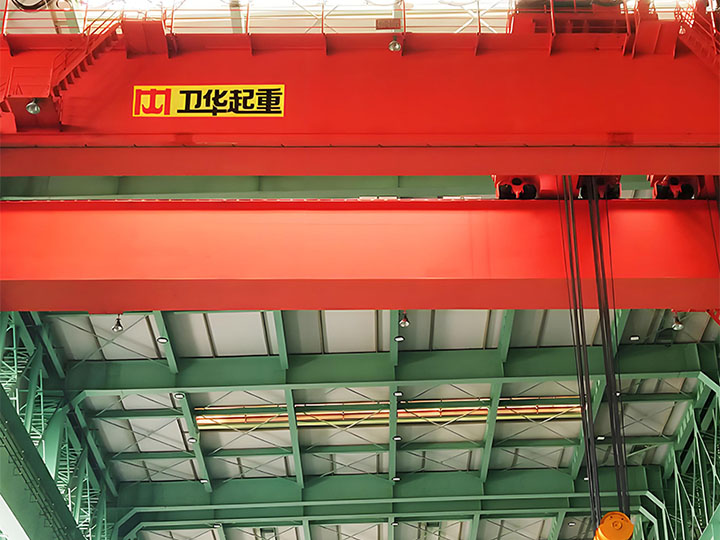
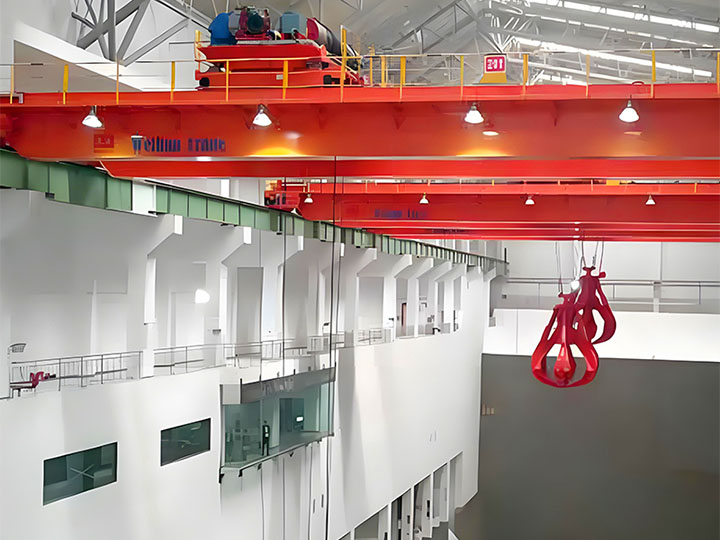
10-ton single-girder bridge crane vs. 10-ton double-girder bridge crane
| Features |
10-ton Single-Girder Bridge Crane (LD Type) |
10-ton Double-Girder Bridge Crane (QD Type) |
| Structural characteristics |
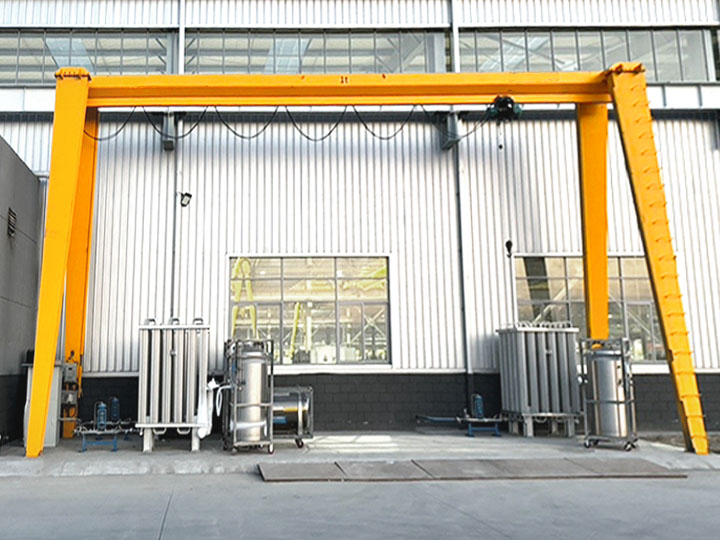
A single main girder (usually an I-beam or box girder), with the trolley running on the lower flange of the girder. Simple and lightweight structure. |
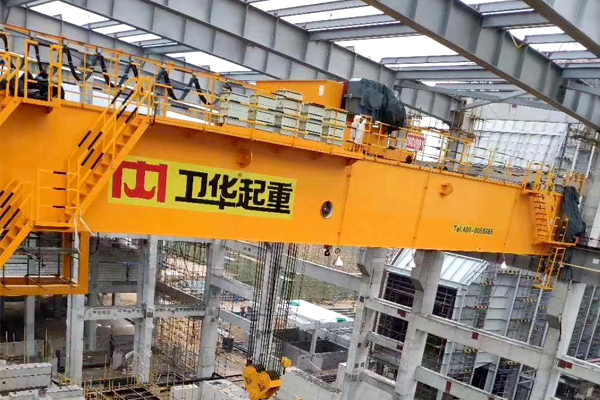
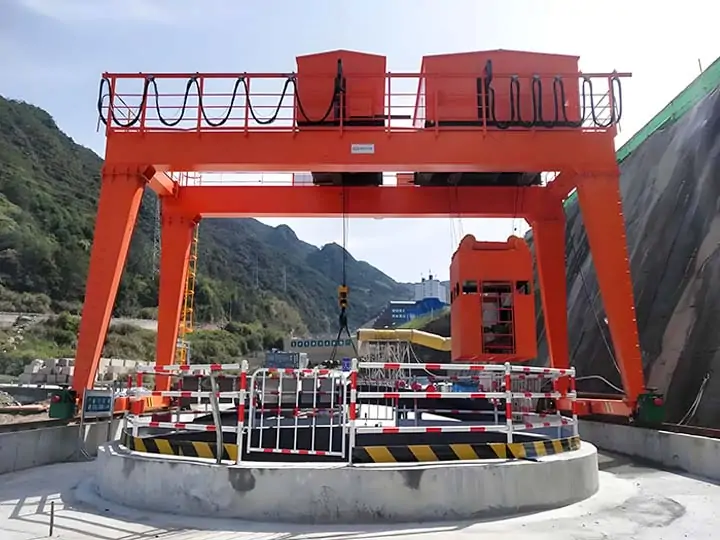
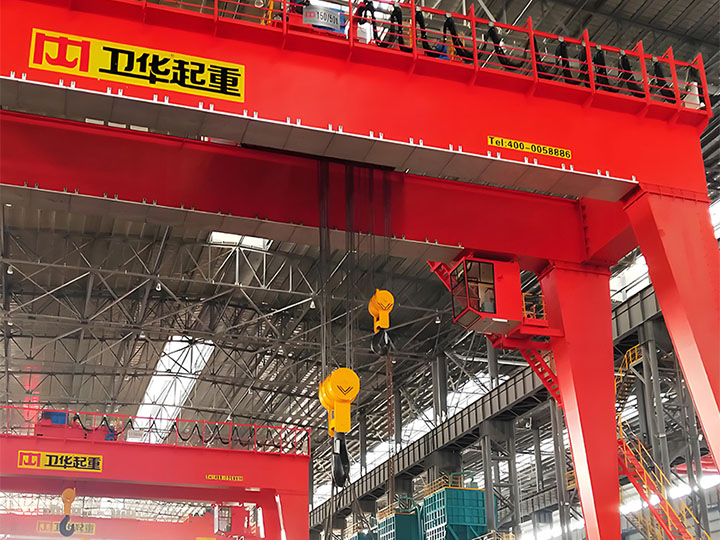
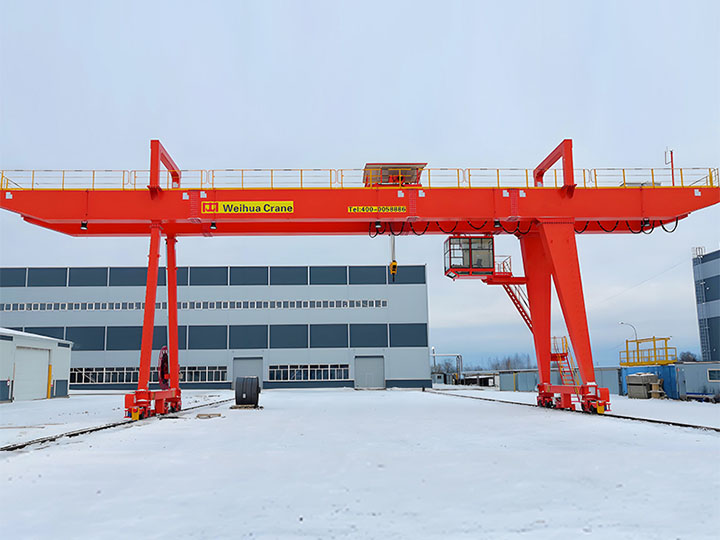
Two parallel main beams (standard box-type structure), with the lifting trolley running on a dedicated track between the two beams. The structure is robust and stable. |
| Stability and rigidity |
Relatively weak. The main girder deflects (bending) significantly after lifting, resulting in slightly poorer running stability. |
Extremely strong. The two main beams share the load, resulting in high rigidity, minimal deflection, and extremely smooth operation. |
| Working class |
Generally suitable for A3-A5 (light to medium) work cycles. Not suitable for frequent, heavy-load continuous operations. |
Wide range, from A5 to A7 and even higher (medium to extra-heavyweight). Fully meets the needs of frequent 10-ton lifting operations in workshops. |
| Span adaptability |
Suitable for small to medium spans. For large spans, the main girder needs to be very high to meet rigidity requirements, reducing economic efficiency. |
Particularly suitable for large spans (e.g., over 19.5 meters). The double-beam structure easily ensures strength and rigidity under large spans. |
| Lifting height |
Because the trolley is below the girder, the effective lifting space is larger (can lift higher for the same factory building height). |
Because the trolley occupies more height between the two beams, the effective lifting height is slightly lower than that of a single-beam crane under the same conditions. |
| Cost |
Lower initial purchase cost, lightweight, less stress on the factory building structure, and relatively simple installation. |
Higher procurement cost and greater weight, requiring higher standards for the factory's load-bearing structure and track. |
| Maintenance and lifespan |
Simple structure, relatively few maintenance points, but under frequent heavy-load conditions, the main girder and rails may wear out faster. |
Robust structure with high design redundancy; under standard operating conditions, the overall lifespan is typically longer and more durable. |
How to Choose a 10-Ton Bridge Crane? It depends on your operating conditions.
1. The preferred scenario for a double-girder bridge crane (QD type) (this accounts for the vast majority):
High workload: Frequent daily use, nearing the rated load (10 tons).
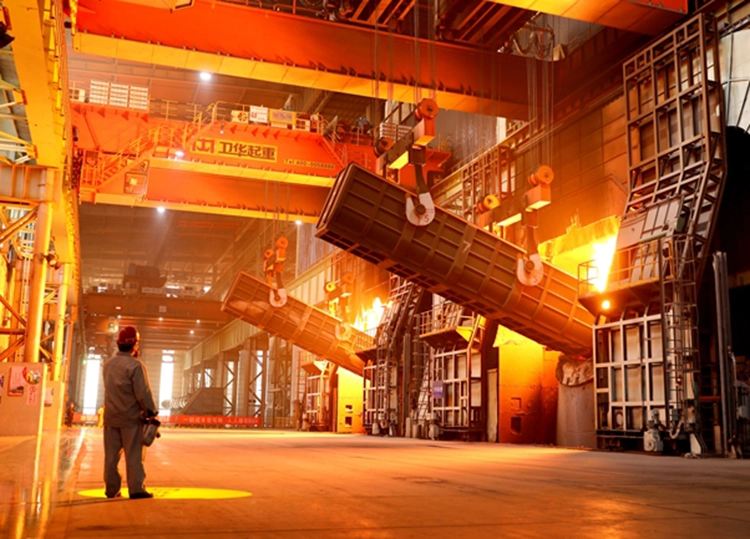
Requires smooth operation: Lifting precision equipment, liquid metal (casting), or situations where strict control of sway is required.
Large span: Typically exceeding 19.5 meters, a double-girder crane is strongly recommended.
Newly built factory or factory with good load-bearing capacity: Can withstand the greater self-weight and wheel pressure of a double-girder crane.
Sufficient budget for a 10-ton bridge crane, prioritizing long-term reliability and durability.
2. A single-girder bridge crane (LD type) may be considered:
Infrequent crane use: Occasional lifting, mostly lightly loaded or unloaded (e.g., machine repair shops, warehouses).
Smaller bridge crane span: For example, in light-duty factory buildings under 16.5 meters.
There are stringent requirements for lifting height: the factory has limited ceiling height, necessitating maximum space utilization.
The budget for purchasing a bridge crane is very tight, and the usage intensity is indeed very low.
The factory is old and has limited load-bearing capacity (but professional calculations are still required).
The 10-ton bridge crane, with its efficient three-dimensional operation capabilities, practical "golden" tonnage, mature and reliable safety design, and excellent substitution for human labor and safety risks, has become an indispensable core material handling equipment in modern industrial workshops, integrating efficiency, economy, and safety. The main advantages of the 10-ton bridge crane are as follows:
1.Full 3D Space Coverage, High Operational Efficiency
Bridge cranes utilize the three-dimensional space above factory buildings, efficiently covering the entire workshop work surface through the coordinated longitudinal movement of the trolley, lateral movement of the trolley, and vertical lifting of the hook. This frees up ground space, ensures smooth logistics, and achieves seamless integration of "aerial transport" and "ground production," significantly improving material flow and overall production efficiency.
2.10-Ton Load Capacity, High Practicality and Cost-Effectiveness
A 10-ton rated lifting capacity is a "golden tonnage," perfectly meeting the lifting needs of most industrial scenarios for heavy components (such as machine tool bodies, steel billets, molds, large castings, and equipment modules). As one of the most mainstream models on the market, the 10-ton bridge crane's mass production offers extremely high cost-effectiveness, making it the optimal choice for solving heavy object handling problems at a reasonable cost.
3.Mature and Reliable, Comprehensive Safety Protection
As an extremely mature and standardized industrial product, the Weihua 10-ton bridge crane boasts well-established design, manufacturing, and application specifications, ensuring high basic reliability. Meanwhile, modern 10-ton bridge cranes come standard with multiple safety devices, such as overload limiters (to prevent overloading), travel limiters (to prevent collisions), and emergency stop switches, establishing a solid safety baseline from a hardware perspective to ensure the safety of personnel and equipment.
4.Flexible operation, reduced labor costs and risks.
Weihua's 10-ton bridge crane completely replaces the original, dangerous, and inefficient manual handling. Flexible operation, especially the widespread use of ground remote control, provides operators with optimal visibility, ensuring precise and safe lifting. This not only significantly reduces the demand for high-intensity manpower and related long-term labor costs, but also fundamentally avoids workplace injuries such as crushing and spraining injuries caused by heavy object handling, and the resulting losses.
Didn't find your industry solution? Consult our technical experts immediately.