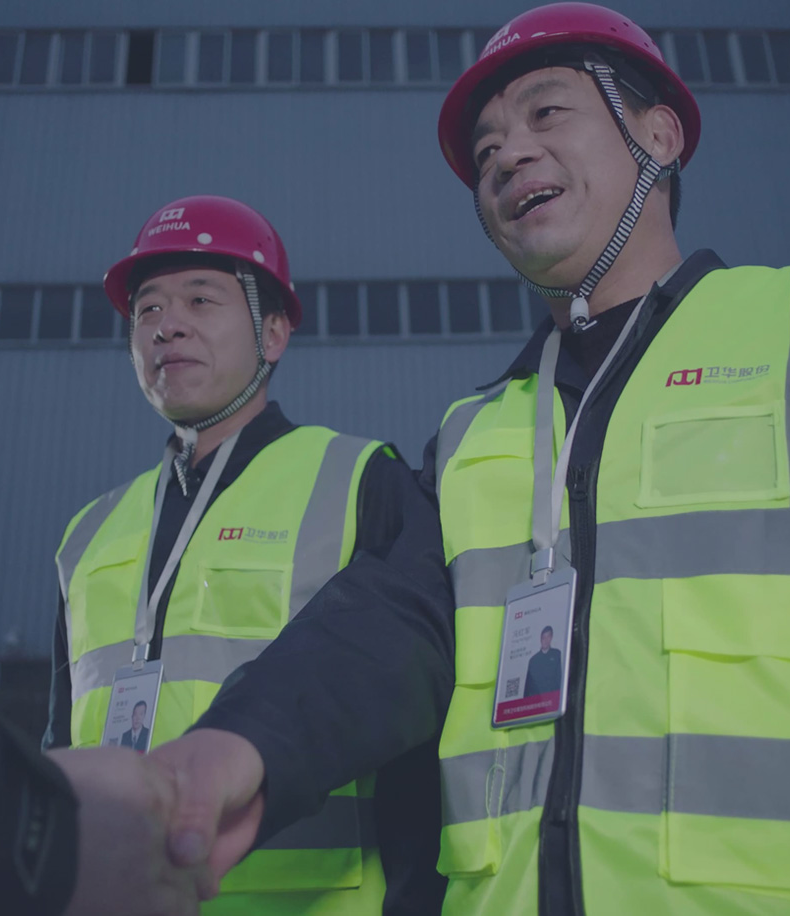
The tide of digital, intelligent, and green transformation and upgrading is sweeping across various industries. In the small town where characteristic industrial clusters were born during the period of rapid economic development, the curtain of upgrading the industrial structure has already quietly begun. In a virtuous cycle of technological innovation and industrial upgrading, the industrial chains of these small towns continue to lengthen, and their industrial levels continue to rise, expanding a richer industrial ecosystem and steadily moving towards high-quality development.
Changyuan, Henan: "The Hometown of Cranes" is heading towards high growth
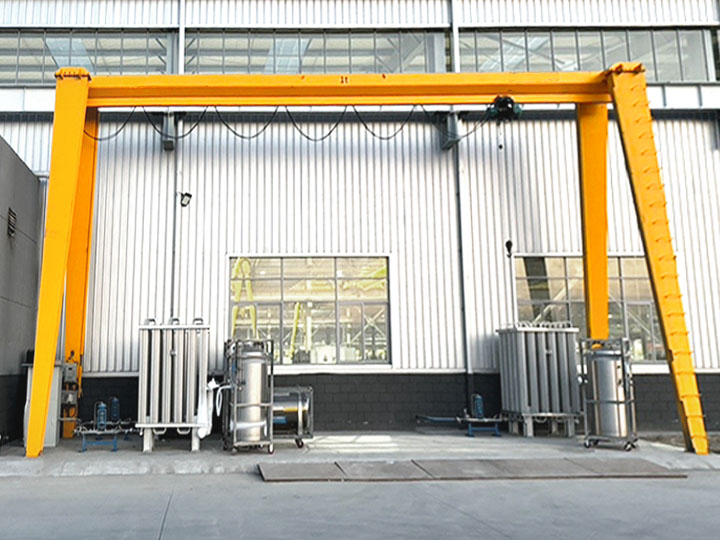
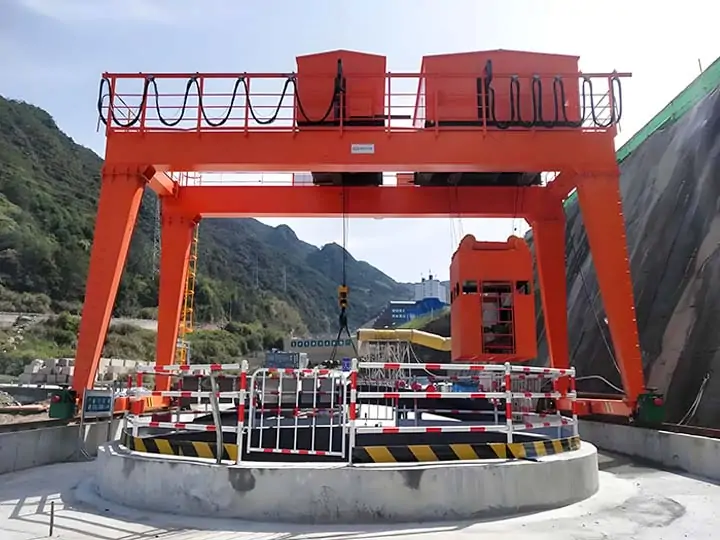
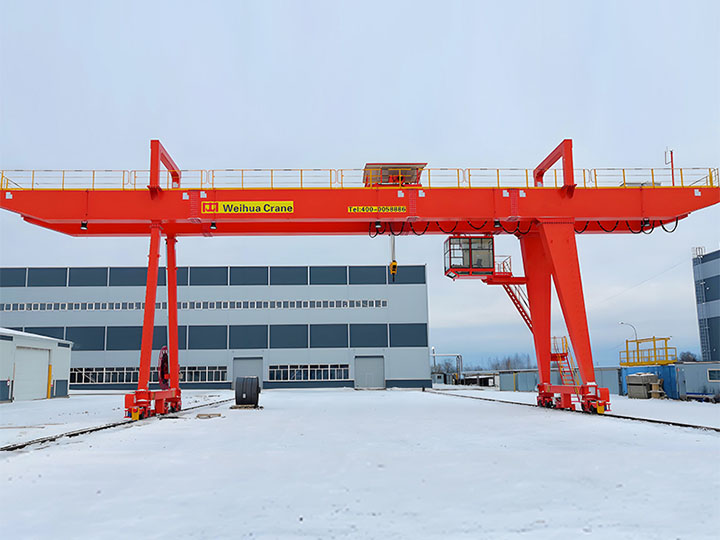
The annual output of 300,000 complete cranes and 1.7 million parts (sets) covers 17 series and more than 200 varieties of gantry cranes, with a domestic market share of more than 70%... The reporter recently interviewed in Changyuan, Henan, the "Hometown of Cranes in China" and learned that through continuous promotion In a virtuous cycle of technological innovation and industrial upgrading, the local crane industry has grown against the trend in recent years. From January to April this year, it achieved above-scale sales revenue of 8.88 billion yuan, a year-on-year increase of 6.2%; it completed tax revenue of 570 million yuan, accounting for 18.4% of Changyuan's total tax revenue, and is steadily moving towards high-quality development.
"Three steps" to get out of small cities and big industries
"This is a ship handling crane that we exported to Malaysia. Its lifting capacity reaches 350 tons, and it has several key technologies of straight travel and diagonal travel and in-situ steering. It is currently the largest tonnage export product in the industry." said Jin Qinghao, chairman of Nukelen (Xinxiang) Crane Co., Ltd.
Changyuan, a small town in Xinxiang, northern Henan Province, was once a Yellow River beach area that was so poor that "they couldn't afford to wear cotton trousers in winter and drink in spring." Today, from the labor-intensive and low-tech industry of "building an industry with one hammer" to the combination of labor-intensive and high-tech, from facing the domestic market to exporting to countries along the "Belt and Road", the lifting industry is booming and has become a pillar industry.
Lu Yansheng, director of Changyuan City Science and Technology and Industrial Information Bureau, said that the development of Changyuan's lifting industry has generally gone through three stages. The period from the late 1970s to the early 1990s was the initial stage of Changyuan's lifting industry. Nili Town and Weizhuang Street, located in the deep beach area of the Yellow River, are the birthplaces of Changyuan's lifting industry. The production method at this stage is mainly based on family workshop production, with low investment and small scale. The main products are hand chain hoists and crane accessories. There are more than 300 production units in the county.
The 1990s was the development stage of Changyuan's lifting industry. In order to adapt to the development of market economy, Changyuan people started joint-stock enterprises. Cai Jingxin and other 10 farmers in Xiaoxinzhuang Village, Nili Town took the lead in jointly preparing to build a lifting equipment factory. The county party committee and the county government attached great importance to this and established "individual start-up, shareholding promotion, community development, and large-scale operation"quo;'s development idea, workshop-style production gradually developed into large-scale production. Through attracting investment through multiple channels and introducing projects from various aspects, key enterprises such as Xinxiang Mining Crane Factory, Henan Yuzhong Hoisting Equipment Factory, and Henan Weihua Crane Co., Ltd. have been established successively. There are 31 companies in the county that have obtained national production licenses and installation licenses. Their main products extend to electric hoists and complete cranes, laying the foundation for the formation of industrial clusters.
Since the 21st century, Changyuan's lifting industry has entered a stage of transformation. In order to further develop the private economy, the county party committee and the county government actively guide enterprises to carry out comprehensive restructuring and establish limited companies or group companies, laying a solid foundation for the establishment of a modern enterprise system. Since then, many large-scale lifting companies have begun to transform and upgrade towards intelligence, high-end, and green, and continue to absorb funds from all parties, recruit talents, introduce advanced production equipment technology and management experience, and form a stable national crane production base and crane accessories market.
Today, Changyuan City is known as the "Hometown of Cranes in China", with 114 crane manufacturing enterprises above designated size and 1,042 supporting manufacturing enterprises, including 2 domestic top three enterprises, 1 enterprise with an annual output value of more than 10 billion yuan, 1 enterprise with an annual output value of more than 5 billion yuan, and 27 enterprises with more than 100 million yuan.
"Run the market" to seize opportunities and create advantages
Industry insiders interviewed said that Changyuan does not have the advantages to develop hoisting machinery in terms of natural resource conditions or urban industry promotion, but it has given birth to a nationally famous hoisting machinery industry. The reason is mainly due to the indomitable fighting spirit of Changyuan people and the marketing experience accumulated from long-term market entry.
Han Xianbao, the founder of the Weihua brand, started a rice-popcorn dough business with profit calculated by points after graduating from junior high school in 1973. Later, he made a living by selling iron nails and scrap materials. By chance, he discovered that repairing jacks and electric hoists was more profitable than selling scrap iron and screws, so he decided to repair jacks and electric hoists, and then started repairing small cranes. After going out to work hard to accumulate funds and acquire technology, he founded Weihua Crane Factory in 1988 and registered Weihua Group in 2004.
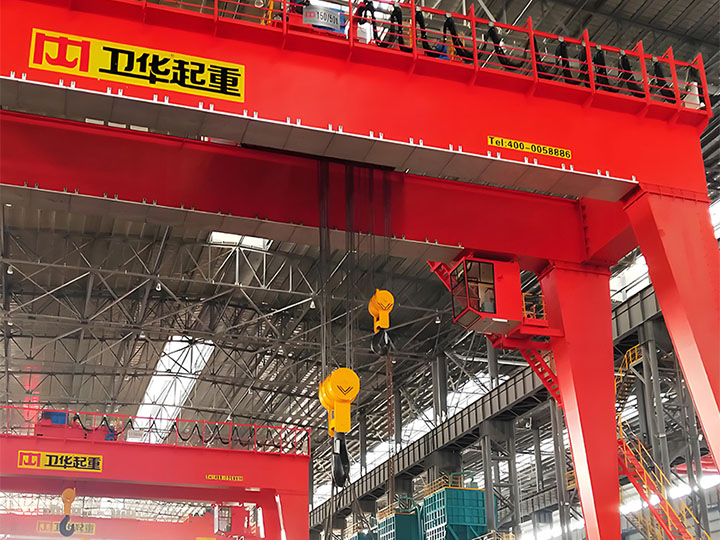
At present, Weihua Group has developed into a leading enterprise in the national lifting machinery industry, and has won more than 500 honors such as "National Manufacturing Single Champion Demonstration Enterprise", "China Machinery Industry Top 100", "National Technology Innovation Demonstration Enterprise", "Henan Province Governor Quality Award", etc. Its products serve China's nuclear power, Thousands of large enterprises such as China Coal, China Shenhua, and PetroChina, as well as key national projects such as the West-East Gas Transmission, Beijing Olympic Stadium Construction, South-to-North Water Diversion, and Hangzhou Bay Cross-Sea Bridge, have helped the Shenzhou series spacecraft, Long March series rockets, and Tiangong series detectors successfully fly into space, and have been exported to more than 130 countries and regions. 20In 2022, Weihua Group's sales revenue was 18.5 billion yuan, and its tax payment exceeded 500 million yuan, ranking first among Changyuan's comprehensive tax-paying enterprises.
Cui Peijun, chairman of Henan Mining Crane Co., Ltd., was originally a salesman who worked in farming during the busy farming period and sold glasses during the slack period. In 1979, 14-year-old Cui Peijun started running around with 35 yuan borrowed and a glasses case on his back, gradually realizing the initial accumulation of capital. With the deepening of reform and opening up, Cui Peijun saw the broad development prospects and unlimited business opportunities of the lifting industry with his keen business vision. He decisively put down his glasses case and spent all his savings to start a sales business of cranes and accessories in Changge, Xuchang. In the process of promoting cranes, he learned the structural principles, accessories performance, maintenance and other related knowledge of various cranes, laying the foundation for setting up a crane factory in the future.
In April 2002, Henan Mining Crane Co., Ltd., founded by Cui Peijun with an investment of 25 million yuan, broke ground and was officially put into production in November of that year. In 2019, the company complied with the requirements of transformation and upgrading and implemented the Hekuang Intelligent Manufacturing Industrial Park project with a total investment of 2.6 billion yuan. It has been basically completed and all 7 production workshops have been put into operation. One of the standardized workshops of approximately 160,000 square meters is the largest single intelligent production workshop in the Asian crane industry.
This is true for large complete machine manufacturing companies, and even more so for small and medium-sized parts companies. Xinxiang Yuxing Crane Factory is a small and medium-sized accessories factory with total assets of 5 million yuan. The manager Xue Fangtian is a well-known skilled craftsman. He has made his way around the world. He first opened the sales department in Weizhuang Hoisting Market, specializing in the distribution of products from Hubei Xianning Motor Factory. He has won the trust of manufacturers and society with his credibility. Later, he invested in the establishment of Xinxiang Yuxing Crane Factory, specializing in the production of high-quality lifting machinery spare parts.
"Strong innovation" cultivates new development momentum
Not long ago, under the guidance of the China Heavy Machinery Industry Association, Weihua Group combined the professional opinions of enterprises, research institutes, and industry technical experts, and after multiple rounds of meetings and continuous discussions, it finally officially released the standards for "New Chinese-style General-purpose Bridge Crane" and "New Chinese-style General-purpose gantry crane".
According to reports, compared with traditional crane standards, the new Chinese crane standards released this time have two major characteristics: innovation and internationality. The new Chinese crane standard stipulates that the crane must adopt new process standards. Compared with traditional cranes, the overall height of the crane is reduced by 10% to 20%, the dead weight is reduced by 15% to 30%, and the wheel pressure is reduced by 15% to 30%. The performance indicators are higher than or on par with international standards, which greatly improves the competitiveness of Chinese lifting products in the international market.
"Under the current economic situation, enterprises in the lifting machinery industry must adhere to stability as the basis and do a good job in innovation coordination, production coordination, and market coordination, in order to better promote enterprises to achieve sustained and high-quality development." Wang Jisheng, vice chairman and secretary-general of the China Heavy Machinery Industry Association, believes that the new Chinese-style crane is not only a new standardLaw is a manifestation of national self-confidence, technological self-confidence, and brand self-confidence.
"Since the beginning of this year, the sales volume of Weihua's new Chinese-style cranes has accounted for more than 40% of the total sales. At the same time, export orders have increased by 163% compared with the same period last year. We have successively signed large orders worth tens of millions of yuan for the Senegal steel project and the Pakistan steel project, and delivered port handling cranes to a shipyard in Myanmar and a terminal in Indonesia. The current production schedule has reached October." said Han Hong'an, chairman of Weihua Group.
Through a variety of intelligent hardware with independent intellectual property rights, combined with 5G, AI and other technologies, the crane is equipped with the "most powerful brain" to realize the status monitoring, fault warning, data analysis and other functions of the lifting equipment; with the help of "digital twin technology", through virtual simulation and digital mapping, the reality of the crane is completely reproduced Status, quickly discover, analyze and repair problems encountered during crane operation, help users and operation and maintenance personnel better understand problems and processes, and find the best solutions... Seizing the opportunity of the integrated development of digitalization, networking, and intelligence, the Changyuan crane industry uses informatization and intelligence as levers to continue to cultivate new momentum for development.
Zhang Weixin, a member of the National Intelligent Manufacturing Expert Committee and former deputy secretary-general of the China Heavy Machinery Industry Association, said that with the continuous deepening of the Internet concept, users' demand for personalized customized services and high-end equipment manufacturing has increased, putting forward new and higher requirements for the industry. At present, the crane manufacturing industry has high digital indicators in R&D, manufacturing, marketing and other aspects, but the indicators of integrated, interconnected and intelligent collaboration are low, and there is a lot of room for improvement in high-quality development. Enterprises that have the conditions and foundation must accelerate transformation in terms of equipment replacement, production line replacement, and machine replacement, and move towards building digital workshops and intelligent factories. (Reporter Li Wenzhe reported from Zhengzhou)
Shengzhou, Zhejiang: Advanced manufacturing industry gathers "ecosystem"
Entering the BYD New Energy Power Battery Production Base in Zhejiang Shengzhou Economic Development Zone (High-tech Park), the first-phase workshop production line is operating efficiently, and the second-phase project construction is in full swing.
As the largest single investment industrial project in the history of Shengzhou, BYD’s new energy project has a total investment of 13 billion yuan. 18 production lines in the first phase have been fully put into operation, with more than 9,000 employees on the job. This year’s output value is expected to exceed 10 billion yuan.
Shengzhou, which was once characterized by a block economy such as ties and kitchen utensils, has made solid progress in recent years to "empty the cage and change the bird, and the phoenix is reborn", realizing a quiet upgrading of the industrial structure, and the advanced manufacturing "ecosystem" has begun to take shape and continues to enrich.
In addition to BYD’s new energy power battery production base project, Shengzhou has successively introduced Haiwei Automobile, Changhong Biological fully biodegradable material industrial park project, and Zhejiang Province in recent years.A large number of advanced manufacturing projects, such as the Jiangnan Nanobody Technology Center Co., Ltd.'s annual production of 45,000 grams of nanobody construction projects and the Betta (Shengzhou) innovative drug industrialization base project, have continued to lengthen the industrial chain and increase the industrial level.
The "seeds" of emerging industries highlight their vitality. At present, Shengzhou has formed seven new characteristic industrial clusters, including new energy vehicles and parts, new materials, life and health, and high-end equipment.
In 2022, the added value of Shengzhou's regulated industries will increase by 10.7%. 52 projects exceeding 100 million yuan have been signed throughout the year. The total investment in newly signed projects is 26.24 billion yuan. The number of key projects listed in Zhejiang Province, approved land use indicators and new energy consumption indicators have all reached record highs.
Incremental industries introduce high-end industries, existing industries promote changes, and Shengzhou builds an advanced manufacturing "ecosystem".
The kitchenware industry in Shengzhou started in the 1980s. From OEM production to private brands, and then to the breakthrough of "integrated stove" single products, it gradually formed the industrial status of "Chinese Kitchenware Capital". In recent years, Shengzhou has adhered to digital empowerment and innovation drive, setting off an "intelligent manufacturing" revolution in China's integrated kitchen industry.
In 2020, Yitian Intelligent Kitchen Appliances, the leading integrated stove company in Shengzhou, teamed up with Alibaba Tmall to explore home kitchen scenarios in depth and released the industry's first cloud-intelligent integrated stove with mature voice interaction function, officially kicking off the advancement to "artificial intelligence unmanned kitchen".
Sun Weiyong, chairman of Zhejiang Yitian Intelligent Kitchen Appliances Co., Ltd., said that the company proactively promotes digital, networked, and intelligent construction and became the first factory in the industry to introduce a 400T continuous stamping automatic production line. Compared with the previous production operation mode of multiple moldings and manual handling, the one-time molding automatic assembly line reduces nearly 50 manual operations, increases the per capita output by 64 times, and at the same time, the quality pass rate reaches 99.9%.
At present, Shengzhou has nearly 500 kitchenware companies, and the output of integrated stoves accounts for more than 65% of the country's total output, making it the largest integrated stove production base in the country.
In 2022, more than 420 companies in Shengzhou have completed digital transformation, and 32 companies have been awarded the honorary title of Shaoxing Intelligent Manufacturing Demonstration Workshop or above. The production efficiency of the built digital workshops and smart factories has increased by more than 60%, and the construction of local clusters and smart manufacturing highlands has taken substantial steps.
A multi-level and three-dimensional talent system is an important source and basic support that drives the "ecosystem" of advanced manufacturing to become more prosperous.
When Haiwei’s new energy vehicle body integrated lightweight project was launched in Shengzhou at the end of last year, corporate orders increased significantly.Factory space is in short supply. After understanding the situation, Shengzhou Economic Development Zone helped the company urgently find a 30,000-square-meter factory building. Wang Chengyong, chairman of the company, said that the high-quality business environment has given Shengzhou Xiangxian more confidence to return to his hometown to develop and contribute to his hometown.
Taking a long-term view and laying a solid foundation, Shengzhou attaches great importance to talent work, attracting talents, cultivating talents, employing talents and retaining talents simultaneously, and continues to improve the business environment and create a livable and workable city.
Shengzhou will provide room ticket subsidies ranging from 500,000 yuan to 5 million yuan for high-level talents listed in the "Catalogue of High-level Talents in Shengzhou City" according to categories; it will implement "one-window acceptance, closed-loop approval, one-on-one service, one matter, one discussion, one-stop settlement" services for enterprises in Shengzhou, and provide entrepreneurial support, financial support and other subsidies to maximize the release of policy dividends. In addition, Shengzhou has carried out the renovation of old residential areas and the construction of future communities, vigorously implemented the talent housing project, and built nearly a thousand talent apartments. Full-time talents with a bachelor's degree and above can apply to move in.
At present, Shengzhou has 1 national-level technology business incubator, 1 maker space, 10 national-level specialized and new "little giant" enterprises, and 259 high-tech enterprises. It has cultivated a total of 29 national-level leading talents and 26 Zhejiang provincial-level leading talents. It has applied for 4 leading innovation and entrepreneurship teams in Zhejiang Province, and its total human resources have reached 225,000. (Reporter Fang Wenyu reported from Hangzhou)
Caoxian County, Shandong Province: Low-carbon development enhances the “green content” of the industry
Walking into the factory area of Shandong Sennics Chemical Technology Co., Ltd., a national "green factory" located in Cao County, Heze City, Shandong Province, green plants and flowers can be seen everywhere. The green coverage rate of this chemical factory is nearly 50%.

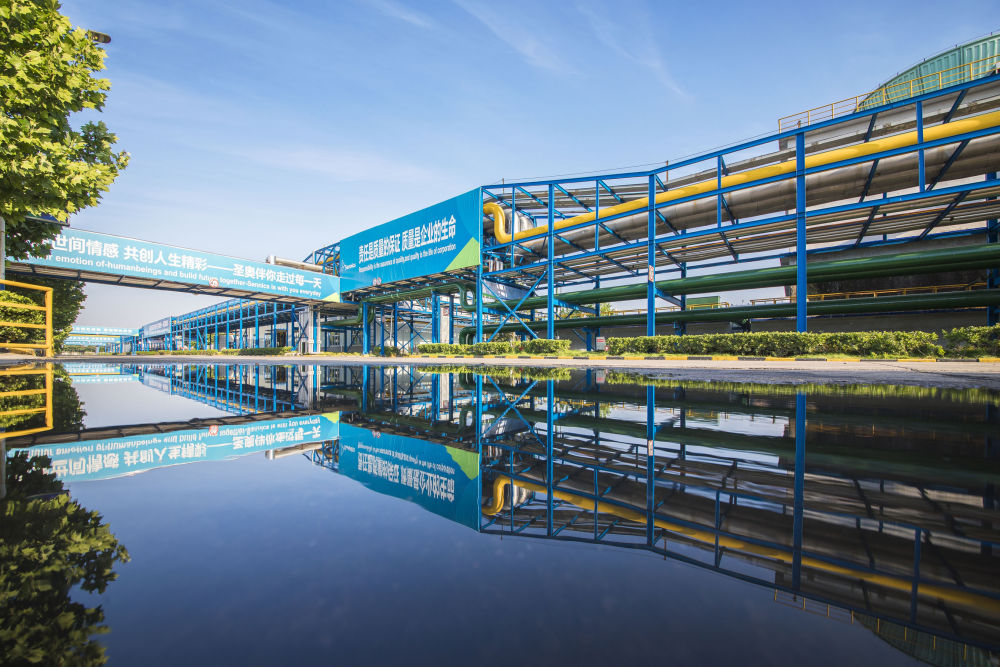
This is the pipe gallery in the production area of Sennic Chemical Technology Co., Ltd. located in Caoxian County, Shandong Province. Photo by reporter Wang Yang
Green is not only reflected in coverage, but also in corporate development philosophy. In front of a large screen in the company's control room, staff demonstrated to reporters the "Carbon Butler" system independently developed by Sennics Chemical. Chen Zhongling, the company's deputy general manager, said that the system, which was launched last year, can display carbon emissions in real time and implement functions such as carbon verification, multi-dimensional carbon analysis, and carbon performance tracking at the business level, helping the company build a low-carbon operating model.
As the local government strengthens guidance, a series of intelligent, green, and information technology transformations are being implemented in Cao County. In the production workshop of Shandong Shangwei Medical Supplies Co., Ltd., the waste heat recovery device invested tens of millions of yuan can save one to two million yuan in energy costs every month. The metal hand mold that has just been put into operation has better thermal conductivity than the traditional ceramic hand mold, and is more effective in saving energy and reducing consumption.
"We encourage employees to carry out 'micro-innovation' and create new profit margins for enterprises through technological transformation projects." said Chen Tao, general manager of Shandong Shangwei Medical Supplies Co., Ltd. Xu Nuo, director of the company's production assurance department, came up with a technical improvement idea that was implemented: a customized high-temperature-resistant nylon brush was installed on the grate piece and driven by a motor to clean the slag, which could improve the heat dissipation performance of the grate piece and extend the grate's service life by three months.
The proportion of traditional industries in Cao County is relatively high, and transformation and upgrading are conducive to long-term development. Driven by Shandong Yinxiang Weiye Group, Caoxian agriculture and animal husbandry has embarked on its own green model. Yu Songye, director of the Group's Breeding Strategy Department, told reporters: "We convert agricultural straw and other resources into forage for dairy cows, and process the livestock and poultry manure from the breeding end into organic fertilizer to improve the soil, thus forming a green ecological and industrial closed cycle chain."
As a chemical company that mainly produces formaldehyde, Shandong Xinzhiyuan Chemical Co., Ltd. uses advanced suspension separation technology to produce pentaerythritol and extend the downstream industrial chain. "We recycle the steam generated during the formaldehyde production process and use it for the production of pentaerythritol, which not only saves a lot of coal-burning indicators, but also increases the product concentration to 98%, achieving a second extension of the industrial chain." Zhang Zhengkun, the company's general manager, said that pentaerythritol is an additive for the downstream production of paints, refrigeration oil and other products, and has a good market prospect.
Green and low-carbon development brings real dividends to enterprises. Data from the Cao County Industry and Information Technology Bureau shows that from January to June this year, there were 469 enterprises above designated size in Cao County, with an estimated total industrial output value of 43.66 billion yuan, a year-on-year increase of 17.5%; operating income of 43.4 billion yuan, a year-on-year increase of 17.2%; and total profits of 2.95 billion yuan, a year-on-year increase of 26%.
“We focus on building the province’s green, low-carbon and high-qualityThe county takes the lead in quality development, promotes industrial strengthening of the county, urban functions, infrastructure, rural revitalization, people's livelihood, business environment and other work, continuously improves the "green content" of the industry, and serves as a bridgehead for the province's integrated development to the west and the opening of the central and western regions to the east. " said Zhao Fulong, Secretary of the Cao County Party Committee.